
Out of all the different EU policies, there are few that have been more discussed than the Common Agricultural Policy (CAP). It has been 57 years since its introduction, and while Europe has changed enormously compared to half a century ago, the CAP hasn’t. It can therefore be stated that the CAP is outdated and inefficient. This opinion piece will explain why.
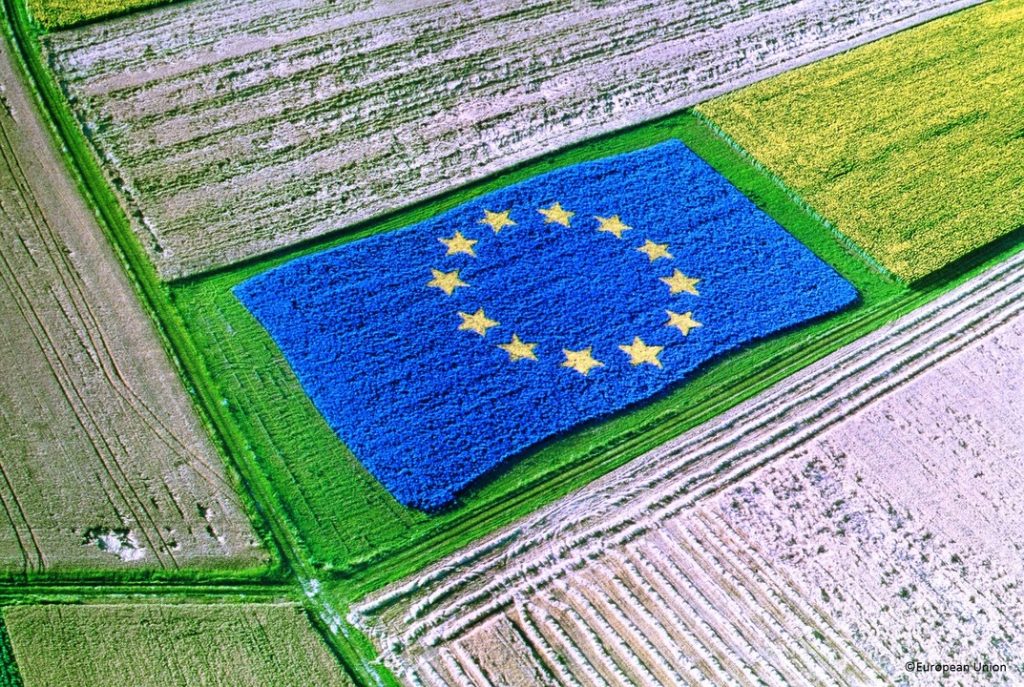
The CAP was introduced in 1963, in order to enhance agricultural productivity and to offer guaranteed prices to farmers for certain products. The fact that the CAP was designed in the post war area is one of the main reasons why it is outdated and incoherent with EU goals.
In the early years of the CAP, its aim was to ensure that food was available to all. In order to produce this food, farmers received subsidiaries from the EU. At one point there was enough food, but the CAP was not changed. Farmers produced much more than necessary, which eventually led to overproduction.
The EU population’s demand for quality food is not being answered by the CAP, as the policy still focuses on quantity. This is very alarming since the CAP is the EU’s biggest item absorbing 40% of the EU budget is.
The CAP consists of two pillars. The budget of the first pillar is in the form of direct payments to farmers located the EU. These payments are calculated based on the size of the operation of a farmer. These direct annual payments create an unfair farm support system. It is quite unfair that 32% of the subsidies go to 1.5% of the farmers industry. We can therefore simply conclude that smaller farmers are being put out of business because of the CAP.
The CAP is also negatively affecting European households. The policy is totally dominated by only European farms. For this reason, we as European consumers, have to pay 17% more than the average world price for products. Households that earn less, and therefore have a lower amount of money to spend, are spending a larger percentage of their income on food than richer households. Resulting in the fact that poorer households in the EU feel the consequences of the CAP the most.
In addition, there is no coherence at all between the COP and Europe’s environment policy and goals. The majority of species in Europe are under serious threat and one of the main causes is the agriculture sector. The ecosystems and species that are dependent on agriculture are in a poor, declining state. In France alone, the amount of farmland birds has fallen by a third in 15 years.
The subsidies received by farmers are calculated on the basis of the size of the land owned by farmers, which results in large farms being treated more favourably than small ones. This forces small farms into harsh agricultural practices, such as the use of nitrogen-rich manure. When released into the environment, it is transformed into Harmonia, a substance that is extremely harmful to the environment.
It is needless to say that the CAP also has several positive aspects. Because of the CAP, we have strict rules regarding the quality and security of food in Europe. However, these strict rules on food make it difficult for third world countries to participate in trading their products. Countries that are not part of the European Union have to deal with tariff barriers. Developing countries that are already unable to compete with their own market, now also have no chance to sell their products on the European market. The CAP thus contributes to blocking economic in Third World countries. Undermining the bloc’s development goals as well.
It can be concluded that the CAP is an insufficient and outdated system and completely incompatible with the EU in present time.
The CAP ignores global warming, lacks sustainability and has a negative impact on the low-class in Europe and the development of Third World economies.
The CAP is only beneficial for big land-owning farms, since it is calculated based on land size. Especially in recent times, with environmental problems rising, isn’t it time for more nature-friendly policies? If the EU doesn’t change the CAP quickly, it will damage more than its intended purpose.
References
Barkham, P. (2018, March 23). EU in ‘state of denial’ over destructive impact of farming on wildlife. Opgehaald van The Guardian: https://www.theguardian.com/environment/2018/mar/23/eu-in-state-of-denial-over-destructive-impact-of-farming-on-wildlife
Commission, E. (sd). The common agricultural policy at a glance. Opgehaald van European Commission: https://ec.europa.eu/info/food-farming-fisheries/key-policies/common-agricultural-policy/cap-glance_en
Land, L. (2017, March 1). UNCAP THE TRUTH ABOUT EU FARM POLICY. Opgehaald van Living Land: https://www.living-land.org/blog/2017/2/13/uncap-the-truth-why-the-common-agricultural-policy-doesnt-fit-anymore
Reuter, D. (2018, December 27). THE COMMON AGRICULTURAL POLICY: PROMOTING THE ‘POLLUTER GETS PAID’ PRINCIPLE. Opgehaald van Green European Journal: https://www.greeneuropeanjournal.eu/the-common-agricultural-policy-promoting-the-polluter-gets-paid-principle/
White, S. (2017, December 4). EU agricultural policy incoherent and outdated – report. Opgehaald van Euractiv: https://www.euractiv.com/section/agriculture-food/news/eu-agricultural-policy-incoherent-and-outdated-report/
 Economic opinion pieces